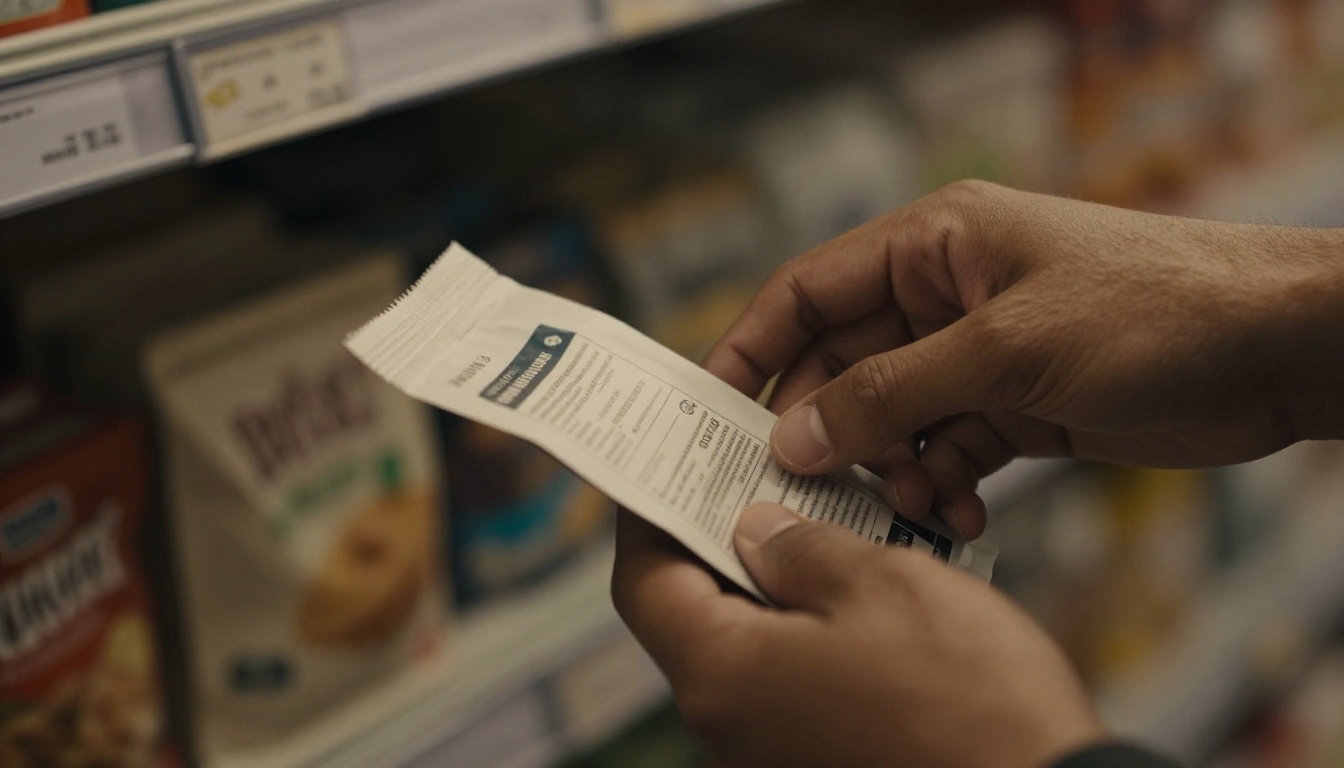
That tiny block of text on a package can feel like a wall of jargon. But labels aren’t random. They’re a shortcut to safety, quality, and what you’re actually buying.
If you’ve ever wondered which part matters most, you’re not alone. You might scan for “natural,” check the price, then walk away. Still, a few label details can help you avoid allergens, pick the right strength, and spot misleading claims.
Once you know how to read the label’s “language,” it gets easier every time. Here’s a simple way to do it.
Start by figuring out what kind of product this label is trying to sell
First, slow down and ask one question: What category is this product in? The label format changes a lot depending on whether it’s food, a drug, a cosmetic, or a household chemical.
Why does that matter? Because each category has different rules for what must be shown, where it appears, and how it’s worded.
Here’s a quick way to sort it out as you pick the product up:
- Food: Look for a Nutrition Facts panel (or a label that tells you nutrition info). Also check ingredient order.
- Over-the-counter medicine: Find the Drug Facts section. It’s built for safe use.
- Cosmetics and personal care: Search for an ingredient list (often with “inactive ingredients” wording).
- Household cleaners and pesticides: Find warnings, usage directions, and safety steps.
Also, train your eyes to find the “core sections” before you read anything deeply. Most labels have a few consistent anchors:
- ingredients or formula
- directions or use
- warnings and safety info
- dates or lot info (when relevant)
If you start with those parts, the label stops feeling like a maze. Next, you can read with a goal instead of guessing.
Labels are safest when you treat them like instructions, not marketing.
Decode Nutrition Facts and ingredients like a quick math problem
For many shoppers, food labels are the biggest challenge. That’s because nutrition labels mix serving size, nutrients, and percent values in one place.
Start with serving size. It tells you how much the label assumes. Then check how many servings are in the whole package. If you eat the whole thing, you’ll need to multiply.
Next, look at calories and key nutrients. For most people, those include:
- Sodium
- Added sugars
- Saturated fat
- Total fat
- Fiber (often helpful for fullness)
Then use % Daily Value (DV) as a guide, not a grade. DV helps you compare products. Still, it doesn’t replace your overall diet.
If you want the official walkthrough, the FDA explains how the Nutrition Facts label works here: Nutrition Facts label basics.
A simple guide to what the label section means
This quick reference helps you know what to scan first.
| Label detail | What it usually tells you | What to watch for |
|---|---|---|
| Serving size | The amount used for all numbers | “Servings per container” when you eat the whole thing |
| Ingredients list | What’s in it, listed by weight | Tricky terms in the first few ingredients |
| Added sugars | Sugar added during processing | Claims like “no added sugar” vs “contains sugar alcohols” |
| Sodium | Salt content | Large jumps between similar items |
| Warnings | Safety and use limits | Allergens, storage notes, or prep cautions |
When it comes to ingredients, the order matters. The first ingredient is usually the biggest part by weight. For allergy and intolerance concerns, ingredients are also where you’ll find the highest risk.
For a bigger picture on how food labeling works across products, see the FDA guide here: Food labeling guide from FDA.
Read Drug Facts labels for safety, not just name recognition
Medication labels can save you from serious mistakes. Yet people often look only at the brand name.
On over-the-counter medicine, find the Drug Facts panel. It’s organized so you can make safer choices fast.
Here’s what to read, in order:
- Active ingredient(s)
This is the “doing the work” part. If you take two products with the same active ingredient, you might accidentally double your dose. - Purpose
It tells you what symptom the medicine treats. - Uses
Use this to confirm it matches your need. - Warnings
Read it like a stop sign. It often covers who should avoid the medicine and when to ask a doctor. - Directions
This includes dose, how often to take it, and age limits. - Other information
Sometimes includes storage instructions. - Inactive ingredients
These can matter for some allergies.
Also, check the exact product strength. “Same medicine, different strength” happens more than people expect.
The FDA’s drug label guide is a strong reference for how the panel is laid out: How to read a Drug Facts label.
Finally, remember a key rule of label literacy: if it says “do not use,” don’t interpret it as “maybe.” That language usually comes from safety data.
Understand ingredient lists on cosmetics, then scan the warnings
Cosmetics and personal care products don’t always list information in the same way as food. But the ingredient list is still your best tool.
A few label habits help:
- Ingredients are usually listed in descending order by amount (with some exceptions).
- Fragrance may appear as a single line, even when it includes many components.
- If you have sensitive skin, focus on ingredients you know trigger reactions for you.
If you want the official rule on cosmetic labeling, the FDA explains cosmetics labeling and ingredient requirements here: Cosmetics labeling and ingredient lists.
Now, don’t ignore “how to use” and warnings. Some products can irritate eyes, need patch testing, or require special handling.
A gotcha to watch for: “for all skin types”
That phrase might mean broad marketing, not proof of safety for you. Your skin can react based on your history, not the label claim. If a product includes strong actives, warnings and directions usually matter more than marketing promises.
Household chemicals and pesticides: follow the label, every time
Household labels are often the clearest about what can go wrong. That’s not to scare you. It’s to keep you safe.
For cleaners, look for:
- Directions for use (dilute or use as-is?)
- Ventilation guidance
- Skin or eye protection notes
- Storage instructions (often “keep out of reach” and away from heat)
For pesticides, the safety steps get even more strict. The EPA emphasizes reading and following the label directions because label instructions match the product’s approved use.
Start here: How to read and follow pesticide labels.
Here’s the practical reason: mixing products or using more than directed can change how the chemical works. It can also increase risk to you, kids, pets, and surfaces.
Turn label reading into a habit you can actually keep
So how do you make this routine without spending forever in the store?
Use a small decision pattern. Next time you buy something new, try this:
- Scan the safety sections first (warnings, contraindications, directions).
- Check the “match” part (ingredients for allergies, active ingredient for meds).
- Compare one metric for food (sodium, added sugars, or fiber).
- Confirm the dose or serving math before you assume.
If two products seem similar, the label helps you choose the one that fits your goals. For some people, that’s less sodium. For others, it’s avoiding allergens or limiting added sugars.
Also, be cautious with broad claims. “Natural,” “light,” “gentle,” or “wholesome” can mean different things across brands. If you want proof, go back to the sections that list real ingredients and real numbers.
Conclusion: you don’t need to understand every word, just the right parts
The hook of label reading is simple: the label tells you what you need for safe use and smart choice. Once you know where to look, you stop guessing.
Start with serving size or Drug Facts, then move to ingredients and warnings. That’s where the real information lives.
Next time you reach for a product, ask yourself one thing: Does this label support the choice I’m about to make? If it doesn’t, set it back and keep comparing.