
In early 2026, a well-known brand got hit with a privacy fine after regulators said it used “dark patterns” to make it harder for people to opt out. The headline was about money, but the real damage was trust.
That’s what compliance protects against. It helps you follow the rules that apply to how you run your business, handle data, hire people, and sell products. When you ignore those rules, problems tend to grow fast.
So what is compliance, in plain terms? It’s the set of laws, standards, and internal policies your company follows so you stay safe, stay fair, and stay in business. This guide breaks down what compliance is, the main types businesses face, the benefits and risks, key rules in 2026, and practical steps to start building a compliance program.
What Business Compliance Really Means for Your Company
Think of compliance like sports. You can play hard, but you still have to follow the rules. If you don’t, penalties come, and the team pays the price.
In one sentence, business compliance means ensuring your business and team follow government laws, industry standards, and internal policies.
For many owners, compliance starts feeling “serious” only after something goes wrong. That’s backwards. Compliance is ongoing, because laws change, technology changes, and your business changes. You add new products, hire new people, sign new vendors, and collect new data. Each change can create a new risk.
At the simplest level, compliance includes everyday tasks like these:
- Getting the right business licenses for your location and services
- Following labor rules for wages, breaks, and worker classification
- Managing customer information carefully and honestly
- Meeting safety rules so work sites don’t hurt people
Many businesses also benefit from a structured compliance management system. If you want a practical model, see Effective Compliance Management Systems: Core Elements for Every Business and Industry. It frames compliance as something you run and improve, not something you only react to.
Most importantly, compliance applies to every company size. A one-person shop still faces rules. A growing team still needs controls. And once you operate across states or online, the rule set often expands.

Key Types of Compliance Every Business Should Master
Different rules apply to different businesses. Still, the types of compliance often overlap. For example, privacy rules can connect to cybersecurity, vendor contracts, and staff training. Employment rules can connect to workplace safety and recordkeeping.
In 2026, data privacy is getting extra attention in the US. Regulators and state attorneys general are pushing enforcement faster. They’re also focusing on how companies handle opt-outs and requests from customers.
Here are the main compliance categories you should know, with real-world examples.
Regulatory and Industry Rules
This is the compliance work tied to law and local rules. It includes licenses, permits, and “you can’t do it that way” requirements.
Examples include:
- A shop that needs zoning permits before opening
- A restaurant that must meet health and sanitation requirements
- A contractor that must follow local safety and licensing rules
If you skip these, you might not just face fines. You can also lose the ability to operate. That’s why this category matters early. It’s the difference between planning a normal opening and dealing with a shutdown.
Financial and Tax Compliance Essentials
Financial compliance is about accurate reporting and following tax rules. It also includes keeping good records for audits, sales tax, and payroll.
Common examples:
- Tracking income and expenses correctly for tax filings
- Handling payroll deductions and filing requirements
- Following IRS and state rules for business forms
Many small businesses use accounting software to reduce mistakes. Even then, you still need a process. Receipts, invoices, and employee documentation need a home. When they don’t, your compliance risk grows.
Also, audits happen. When they do, you want proof that you followed the rules. Good recordkeeping can turn a stressful event into a manageable one.
Data Privacy and Cybersecurity Standards
Data privacy and cybersecurity show up whenever you collect personal information. That can include email addresses, payment details, health records, or even device data.
In the US, privacy enforcement often centers on what companies say and what they do. For example, regulators have penalized companies for not honoring opt-outs, including Global Privacy Control (GPC). They’ve also fined companies for confusing privacy notices and delays in handling requests.
Then cybersecurity enters the picture. If you say you protect data, you must take real steps. A weak security setup can lead to breaches, and breaches can trigger more legal risk.
If you want a broader view of where enforcement is moving in 2026, read Cybersecurity & Privacy 2026: Enforcement & Regulatory Trends. It summarizes how regulators keep raising the bar on security and governance.
Environmental, Health, and Safety Protections
Even office-based businesses can face safety duties. Manufacturing, construction, labs, and warehouses face more. This compliance type focuses on reducing harm.
Examples include:
- Waste rules for disposal and hazardous materials
- Workplace safety procedures
- Training on equipment and emergency response
In the US, organizations often look to OSHA-type standards for safety expectations. The goal is simple: reduce injuries and protect people. When you treat safety as a real program, you also reduce downtime, claims, and reputational harm.
Why Strong Compliance Drives Business Growth and Trust
Compliance can feel like a cost. It doesn’t have to be.
When you build compliant systems, you reduce the chance of sudden crises. You also make it easier to win customers, partners, and contracts. Many buyers ask for proof of controls. They want confidence you can handle their data and keep operations stable.
Compliance also tends to improve the basics. Clear policies reduce confusion. Training reduces mistakes. Audits catch weak spots earlier. In other words, compliance often makes your business run smoother.
Shielding Your Business from Fines and Lawsuits
The downside of weak compliance can be huge. In early 2026, regulators and attorneys general increased privacy enforcement, and some states moved away from “fix-it later” approaches. That means violations can lead to penalties quickly.
For example, a privacy failure tied to opt-out controls can cost far more than a quick software update. A breach can trigger notifications, lawsuits, and long-term scrutiny.
In healthcare and other regulated spaces, penalties and lawsuits can pile on fast. One early 2026 example involved a breach that exposed data tied to hundreds of thousands of people, including sensitive identifiers. After the notification wave, the business also faced legal pressure.
When you look at risk like this, compliance stops being “paperwork.” It becomes a shield.

Building a Reputation Customers Love
Trust drives growth, especially online. Customers want to know you handle their information with care. They also want to believe you follow employment rules and safety rules, even when nobody is watching.
Compliance supports that trust in small and steady ways. Clear privacy notices, accurate marketing practices, and solid data handling show respect. Fair hiring and safe workplaces show respect too.
Also, when you’re compliant, you’re easier to work with. Vendors often require security questionnaires. Some require standards like SOC 2. Some require proof of privacy practices. If you can’t provide that, you may lose deals.
The “best time” to build compliance is before you need it.
The Costly Risks of Skipping Compliance
Skipping compliance doesn’t just lead to fines. It causes a chain reaction.
First, you might get an enforcement action. Then you get to spend time fixing issues under pressure. After that, your incident can trigger customer complaints and churn. Finally, litigation can drag your leaders into depositions and settlement talks.
Here’s what can happen when compliance fails:
- Regulatory fines that drain cash
- Lawsuits from customers, employees, or business partners
- Operational shutdowns when permits or licensing get revoked
- Staff turnover when people feel unsafe or unsupported
- Leader-level scrutiny, including in serious cases
In early 2026, many privacy enforcement actions focused on how companies handle opt-outs and user rights. Regulators also zeroed in on security that didn’t match what businesses promised.
Cyber incidents make this worse. After a breach, teams often rush cleanup. Yet rushed cleanup can create new gaps, like missing logs or incomplete documentation. Regulators and litigators notice those issues.
If you want a snapshot of enforcement priorities and compliance risks, check March 2026 Business Enforcement Priorities and Compliance Risks. It highlights how quickly enforcement can shift across areas.
So the real question becomes: can you afford to wait until regulators knock? In most cases, the answer is no.
Top Regulations Businesses Can’t Ignore in 2026
No single list fits every business. Still, certain rules show up again and again, especially for companies that collect data, sell to others, or operate under tight contracts.
Below are key regulations and standards to understand in 2026, plus why they matter now.
GDPR and Global Data Privacy Laws
GDPR applies to many companies, even if you’re not based in Europe. If you offer goods or services to people in the EU, or you track their behavior, GDPR can apply.
GDPR focuses on:
- Legal basis for processing
- Clear consent where required
- Security for personal data
- User rights (access, deletion, portability)
One big reason GDPR stays on business radars: penalties can reach up to 4% of annual global revenue for certain violations. That’s why privacy work matters even for small teams.
Also, online businesses often face multiple privacy laws at once. You might need GDPR practices, state privacy rules, and contract-based requirements. The hardest part is making your processes consistent.
HIPAA for Health-Related Businesses
If you handle health data, HIPAA can apply. That includes more than hospitals. Some vendors, clearinghouses, and service providers also fall under HIPAA rules.
HIPAA focuses on protecting protected health information. It includes rules around access controls, safeguards, and required documentation. Audits and investigations also keep rising in importance as healthcare data stays a top target.
Even if you don’t think of yourself as “healthcare,” you should check whether your work touches patient data. Partnerships and software tools can pull you into compliance obligations.
Cyber Standards Like ISO 27001 and SOC 2
ISO 27001 and SOC 2 are common cybersecurity standards. They’re not always laws, but they shape real requirements in contracts and vendor reviews.
- ISO 27001 focuses on managing information security risks through a formal system.
- SOC 2 reports on controls for areas like security, availability, and confidentiality, based on a framework.
You’ll often see these standards requested by enterprise customers. They help buyers reduce vendor risk. They also force your team to document controls, test them, and improve them over time.
In short, cyber standards often act like proof. Proof matters when you want to win bigger contracts.
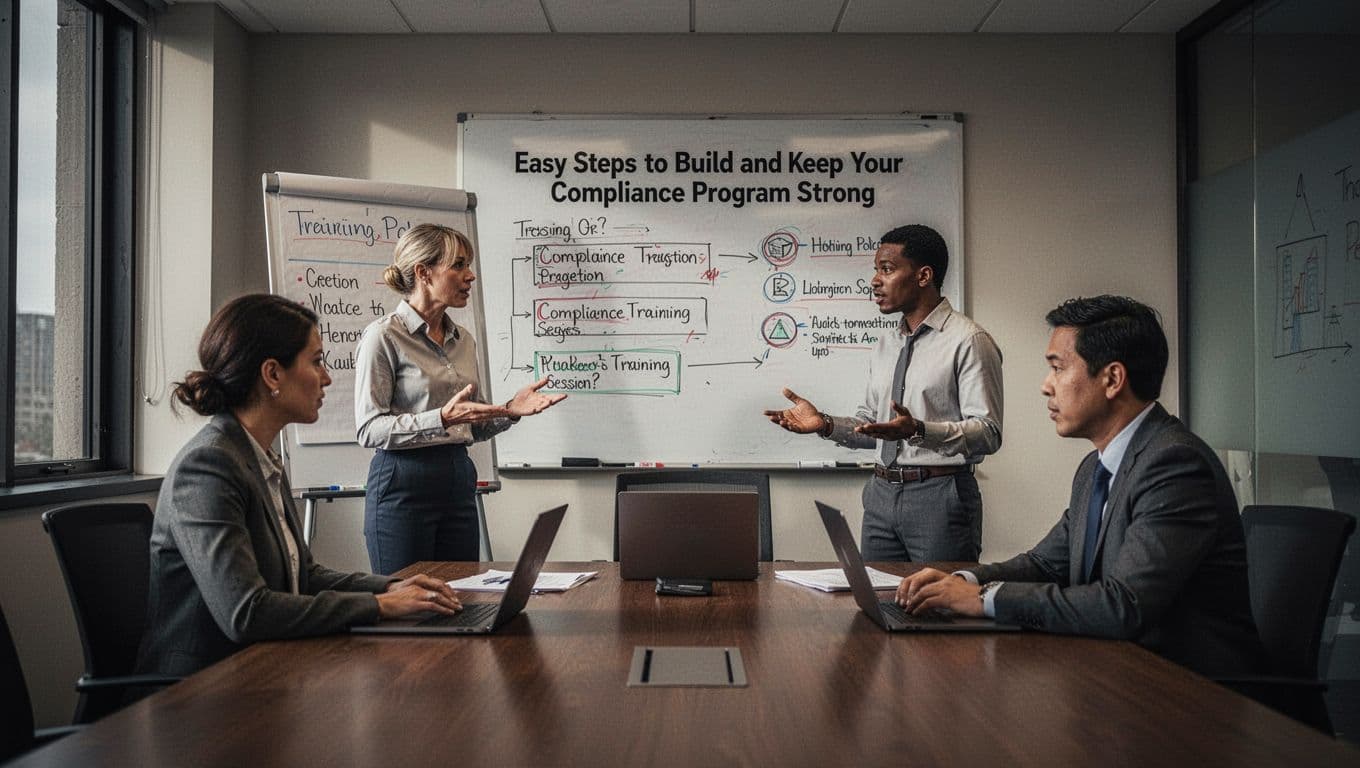
Easy Steps to Build and Keep Your Compliance Program Strong
A compliance program doesn’t need to be huge. It does need to be real.
Start by identifying which rules apply to you. Then write clear policies. Next, train your team and track results. Finally, audit and fix issues.
If you want a structured approach, read Steps to Build an Effective Compliance Management System.
Here’s a practical path that works for many small businesses:
- Pick your top risk areas
- Licensing and permits
- Data privacy and security
- Employment and safety
- Tax and financial recordkeeping
- Write short policies
- Use plain language.
- Cover what people should do, not just what’s “required.”
- Assign an owner for each policy.
- Train staff with examples
- Show what to do when a customer asks for deletion.
- Show what to do after a suspicious email.
- Explain safety steps for your work area.
- Track proof
- Keep training logs.
- Keep system and security records.
- Keep incident reports, even minor ones.
- Audit and improve
- Review policies at least once a year.
- Run internal checks on access controls and data handling.
- Fix gaps quickly, then document the fixes.
Some teams also use software for compliance tracking, policy management, and vendor questionnaires. AI can help with drafting and follow-ups, but the key is review. Compliance needs accuracy, not guesswork.
Conclusion
Compliance is simple in concept, but powerful in practice. It’s the rules-following work that keeps your business safe, your customers protected, and your team operating legally. When you treat compliance as ongoing, you reduce costly surprises.
Start with one area this week. Pick the rule that affects your biggest risk, then build a small plan around it. Train your team, document your steps, and review what’s working.
If you want help, share this post with another owner. Or leave a comment with the compliance area you’re worried about most. Then keep moving forward with steady, honest improvements. That’s how compliance pays off.